GCSE Chemistry tutor · live 1-on-1 online
GCSE Chemistry tutor, 1-on-1 online
Moles, bonding, equations or organic chemistry, every topic made clear. Send us a mock you have sat and we fix the gaps 1-on-1. Live 1-on-1 online lessons for students across the UK.
- £25 an hour
- Live 1-on-1
- Free mock review and demo
- Edexcel and Cambridge
No WhatsApp on this device? Message us at +91 9586753377
Online GCSE Chemistry tuition, wherever you are in the UK
Every class is live online, so you get a chemistry tutor without the travel.
No travel
Lessons happen at home on a laptop or tablet, anywhere in the UK.
At a time that suits you
We agree a regular lesson time with your family after the free demo, in UK time.
Recorded to rewatch
Sessions are recorded, so you can go back over a method before a test.
One price everywhere
£25 an hour, live 1-on-1, with a free mock review and demo class first.
Where the GCSE Chemistry marks are
Rules set for every exam board, which shape how we teach.
Across your papers
- Maths skills at least 20% of the marks, in GCSE Chemistry and in Combined Science
- Required practicals at least 15% of the marks, examined in the written papers
- Calculations moles, concentrations and yields come up on both papers, on Foundation and Higher
So lessons mix the chemistry with calculation practice and the required practical questions from the start.
Free GCSE Chemistry mock review
Sit a recent mock or past paper, or send us the topics you find hardest, on WhatsApp. In your free demo class we go through the questions where you lost marks, show you why, and give you a plan to your exams.
See the course: GCSE Chemistry course · Also taking Physics? GCSE Physics tutor
Get my free mock reviewYour exam board's papers
We follow your specification exactly, whichever board you sit.
Pearson Edexcel GCSE Chemistry (1CH0)
- Paper 1 1 hour 45 minutes, 100 marks: key concepts, states of matter and mixtures, chemical changes, extracting metals and equilibria, and the separate chemistry topics
- Paper 2 1 hour 45 minutes, 100 marks: key concepts, groups in the periodic table, rates of reaction and energy changes, fuels and Earth science, and the separate chemistry topics
Foundation and Higher tiers. The core practicals are examined in the written papers, so we practise those questions throughout.
On Cambridge IGCSE, AQA, OCR or WJEC Eduqas Chemistry? We teach those too. Tell us your board in your first message.
How we plan your GCSE Chemistry
Adapted to your free review: we spend the time where your marks are.
- DiagnoseYour free mock review: which marks went on content, which on calculations, and which on reading the question.
- Atoms, bonding and structureAtomic structure, the periodic table, ionic, covalent and metallic bonding, and how structure explains properties.
- Quantitative chemistryRelative formula mass, moles, balanced equations, concentrations and yields: the calculations that come up on every paper.
- ReactionsChemical and energy changes, electrolysis, rates and equilibrium, organic chemistry and chemical analysis, with the required practicals behind them.
- Exam papersTimed papers marked against the official mark scheme, with an error log of every lost mark.
Try two GCSE Chemistry questions
Original questions at GCSE standard. Give yourself two minutes each, then open the solution.
Moles
The relative formula mass (Mr) of carbon dioxide, CO2, is 44. How many moles are in 22 g of carbon dioxide?
- 0.50 mol
- 2.0 mol
- 22 mol
- 968 mol
Show the worked solution
- Moles = mass ÷ Mr.
- 22 ÷ 44 = 0.50 mol.
- Answer: A. Option B divides the wrong way round, and option D multiplies instead of dividing.
Concentration
0.20 mol of sodium hydroxide is dissolved in water to make 500 cm3 of solution. What is the concentration?
- 0.10 mol/dm3
- 0.40 mol/dm3
- 2.5 mol/dm3
- 100 mol/dm3
Show the worked solution
- Convert the volume to dm3: 500 cm3 = 0.500 dm3.
- Concentration = moles ÷ volume = 0.20 ÷ 0.500 = 0.40 mol/dm3.
- Answer: B. Option A multiplies instead of dividing, and option C divides the volume by the moles.
More from us: GCSE Chemistry course · A level Chemistry tutor · GCSE Maths tutor
How it works
From first message to first lesson in three steps.
- Message us on WhatsAppTell us the course, your exam board and what you find hard.
- Take a free demo classMeet your tutor live, 1-on-1, at a time that suits you.
- Learn at £25 an hourBook regular 1-on-1 lessons built around your course and exam dates.
Your tutors
Founder-led and teaching online from India, with students in the UK, the US, Singapore, Dubai, Taiwan, Africa and India.
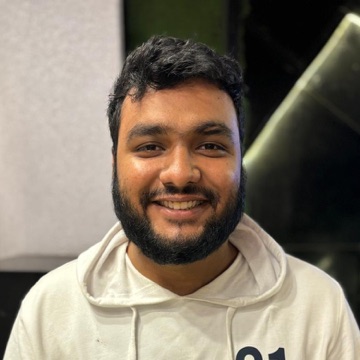
Ashraf Bhura
4+ years teaching. Software engineer and physics and programming competition coach.
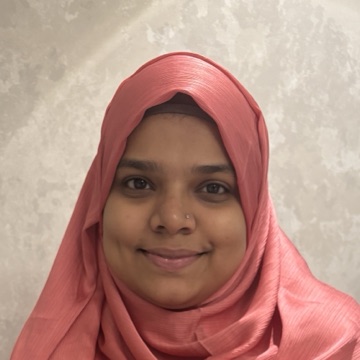
Fatema Bhatt
4+ years teaching. Coach for TMUA, STEP and MAT.
What families say
“Ashraf is an amazing physics teacher. He’s super patient, extremely mature and can motivate teenage students. He strikes the right balance that allows students to thrive. I highly recommend him to anyone looking for a sincere teacher who is passionate about teaching.”
“Electricity and Magnetism was difficult for my son before working with Ashraf. His teaching style adapted to the student's needs and inspired genuine curiosity. The classes greatly improved conceptual understanding before board and entrance exams.”
Questions
How much does GCSE Chemistry tutoring cost?
£25 an hour for a live 1-on-1 lesson. The mock review and your first demo class are free, with nothing to pay and nothing to sign.
Who teaches GCSE Chemistry?
Ashraf Bhura, our co-founder, who has 4+ years of teaching and teaches Chemistry, Physics and maths.
Which exam boards do you teach?
We specialise in Edexcel and Cambridge IGCSE. We also teach AQA, OCR and WJEC Eduqas: tell us your board and we follow its specification.
Combined Science or separate Chemistry?
We teach both. Separate (triple) Chemistry has two papers of 1 hour 45 minutes; Combined Science chemistry is part of a wider course. Tell us which you are on and we match it.
How much maths is in GCSE Chemistry?
At least 20% of the marks in GCSE Chemistry test maths skills, such as moles, concentrations, percentage yield and reading graphs. We practise the calculations alongside the chemistry.
Do you help with the required practicals?
Yes. Practical questions come up on the written papers, so we go through the method, the variables and how to write up results and conclusions.
When are lessons?
We agree a regular time with you after the free demo, at a time that suits your week, UK time.
Where are your tutors based?
We teach online from India, with students in the UK, the US, Singapore, Dubai, Taiwan, Africa and India.
How do I pay?
By international bank transfer. We send the details on WhatsApp.
Can you guarantee a grade?
No one honestly can. Results vary by student. What we can promise is patient, focused 1-on-1 help on exactly the topics you find hard.
Do you offer lessons in my area?
Every lesson is live 1-on-1 online, so you can learn GCSE Chemistry with us wherever you live in the UK, with no travel. Lessons are online only, at a time agreed with your family.
How do I start?
Message us on WhatsApp with the course, your exam board and what you find hard. We will set up a free demo class.
Start with a free demo class
£25 an hour after that, live 1-on-1, at a time that suits you.
Book a free demo on WhatsAppOr message us on WhatsApp at +91 9586753377